
Advanced Treatment System Installation
Professional nitrogen reducing and aerobic treatment unit installation for residential and commercial properties across Tennessee
Same-Day Emergency Service
Licensed & Certified Technicians
Serving All of Tennessee
Upfront Pricing, No Hidden Fees
Fully Insured
State Licensed
Eco-Compliant Disposal
Written Service Reports
Available 24/7 (00:00 – 23:59)
🎁 FREE Inspection with Every Pump-Out
Mention this offer when you call!
5 Highlights on Advanced Treatment System Installation
Certified and permitted installers
Our team holds current certifications from the Tennessee Department of Environment and Conservation. As a licensed contractor, we install every advanced treatment system to meet state and county health department code requirements, pulling all permits before excavation begins. We are fully insured and ready to handle the complexity of any job.
Nitrogen reducing system expertise
We specialize in proprietary units that nitrify and denitrify effluent, reducing nitrate levels well below regulatory thresholds. These engineered septic systems protect groundwater and nearby potable water sources, helping to improve water quality across Tennessee communities.
Full site assessment included
Every advanced treatment system installation starts with a soil evaluation, perc test, and water table analysis. Our soil evaluator will assess your property, document the soil profile including clay content and storm drainage patterns, and measure setback distances to produce an accurate as-built drawing.
Aerobic and recirculating configurations
We install aerobic treatment units, recirculating sand filters, textile filters, and drip irrigation systems. Each configuration is designed and matched to your lot size, soil percolation rate, and daily wastewater volume. Whether your property relies on gravity flow or requires pressure distribution, we have the solution.
Operation and maintenance plans provided
After installation, you receive a detailed operation and maintenance plan covering float switch checks, aerator servicing, chlorinator tablet replacement, and compliance inspection schedules. This documentation helps ensure your system works at top efficiency for years to come.
Need Septic Service Today?
Our team is standing by to help. Fast response times and upfront pricing guaranteed.
Why Choose Our Advanced Treatment System Installation
Advanced treatment system installation is a specialized discipline that demands precise engineering knowledge and hands-on field experience. Rural Septic TN brings both to every project. Contact us to learn how our licensed team can help with your septic needs.
We have installed hundreds of advanced treatment systems across Tennessee’s rural counties, serving homeowners and businesses throughout the region. Our installers hold a valid license from the state and are trained directly by manufacturers of proprietary units. That means your aerobic treatment unit, recirculating sand filter, or nitrogen reducing system gets installed exactly to specification.
We do not subcontract. Our crews dig and excavate the site, set tanks, connect plumbing and piping, wire control panels, and commission every component. You work with one team from the site assessment through the final compliance inspection. This complete approach ensures better results and prevents delays.
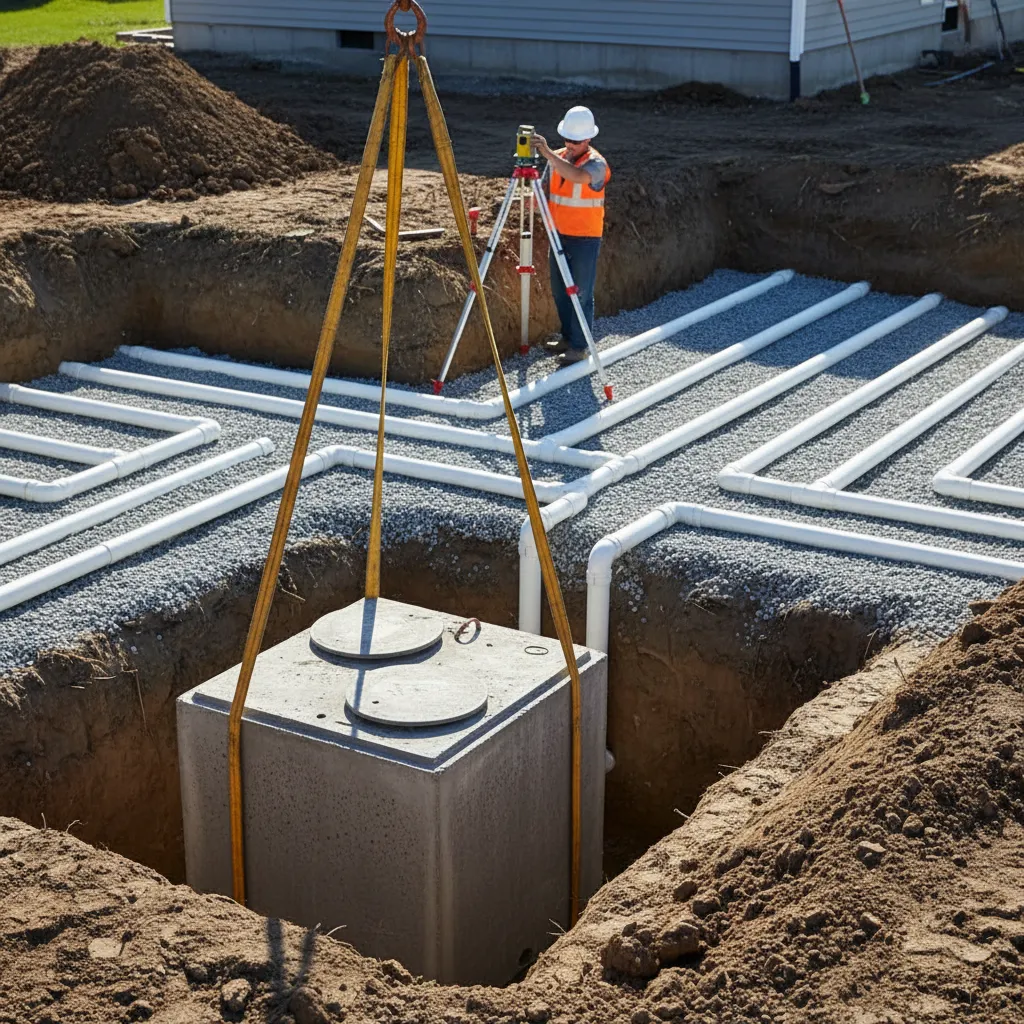
Our pricing is transparent. Request a free quote and we will provide a written scope covering the dosing chamber, pump chamber, distribution box, laterals, geotextile fabric, aggregate, and every fitting. We offer competitive rates with no surprise charges after we break ground. You can find detailed estimates before making any decisions.
We guarantee our installation work for two years. If a float switch fails, a solenoid valve sticks, or an alarm panel malfunctions within that window, we repair it at no cost. We also offer ongoing maintenance contracts so your system stays compliant and functioning for decades. Our business has built a reputation you can rely on.
Tennessee’s health departments trust our work. County inspectors know our as-built drawings are accurate and our inspections pass on the first visit. That reputation saves you time and money.
Licensed & Certified
Tennessee State Licensed
Fully Insured
Comprehensive Coverage
Eco-Compliant
Permitted Disposal Sites
On-Time Service
We Keep Our Appointments
Signs You Need Advanced Treatment System Installation
Advanced treatment system installation becomes necessary when conventional septic configurations cannot meet site conditions or regulatory standards. Here are five situations that call for an engineered solution. If any of these apply to your property, schedule a consultation to discuss your options.
Your soil fails a standard perc test:
When the soil percolation rate is too fast or too slow for a conventional drain field, a standard leach field will not treat effluent properly. Heavy clay content or sandy conditions can both cause issues. An advanced treatment system paired with a mound system, drip irrigation system, or pressure manifold can overcome poor or marginal soil conditions. Your soil evaluator will document the soil profile and recommend the right configuration to support your septic management needs.
You're building near a high water table:
A saturated water table close to the surface prevents subsurface absorption. Elevated or mounded advanced treatment systems aerate and disinfect effluent before it reaches the distribution area, keeping pathogens and nitrates out of groundwater. This approach works to reduce contamination risk and improve overall water quality at the point of discharge.
Your existing septic system has failed:
Surfacing effluent, odorous yards, and clogged biomat in the absorption field all signal failure. When a conventional system cannot be repaired or replaced in kind, retrofitting to an advanced treatment system is often the only compliant path forward. The health department may require a nitrogen reducing system or aerobic treatment unit as a condition of the new permit. Do not wait for the problem to worsen. Contact us to start the assessment process.
Your property sits within a setback restricted zone:
Tight lots near wells, streams, sewer lines, or property easements shrink the available footprint for a drain field. Advanced treatment systems produce cleaner, tertiary quality effluent, which allows reduced setback distances under Tennessee regulations. Our team can help you find an approach that handles these restrictions.
You're adding bedrooms or commercial capacity:
Increasing wastewater volume beyond your current system’s rated capacity triggers a new permit. An advanced treatment system with a dosing pump, equalization tank, and recirculating design handles higher daily flows while meeting biochemical oxygen demand and dissolved oxygen standards. This section of upgrades requires careful designing to ensure long-term performance.
Our Advanced Treatment System Installation Process
Advanced treatment system installation follows a structured sequence that protects your property and satisfies every regulatory requirement. Our proven process ensures the job gets done right the first time.
Site assessment and soil evaluation
We visit your property, conduct a perc test, log the soil profile, and measure setback distances to wells, structures, and waterways. We identify the water table depth, check for clay and storm drainage issues, and map the best location for the system. Our contractor will assess every factor required to design your system properly.
System design and permitting
Based on site data and your daily wastewater volume, we design the treatment configuration. We select the appropriate aerobic treatment unit, sand filter, or nitrogen reducing system and submit the engineered plans to your county health department for permit approval. We handle the complexity of code compliance so you do not have to.
Excavation and tank placement
Our crew will dig and excavate the site, grade the base, and set the precast concrete or fiberglass tanks. We position the septic tank, dosing chamber, pump chamber, and any equalization or settling chambers according to the approved design. We remove spoils and prepare the area for the next phase.
Piping, electrical, and component installation
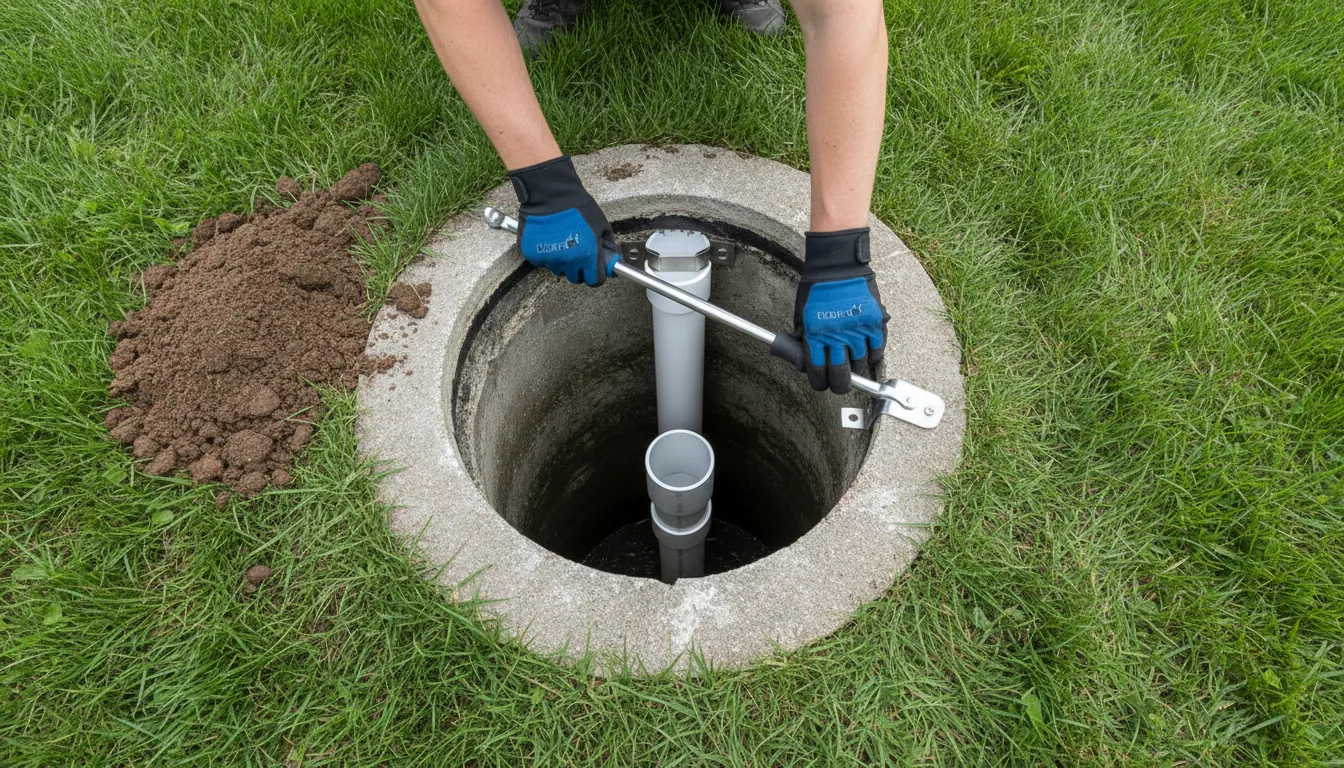
We connect all solid pipe and perforated pipe runs, install the distribution box, laterals, baffles, effluent filters, risers, and access lids. We wire the control panel, alarm panel, float switches, aerator or blower, and dosing pump. UV disinfection units or chlorinators get mounted and plumbed. All plumbing connections are tested to ensure a complete seal.
Backfill, grading, and commissioning
We backfill around all tanks, compact the soil, and grade the surface for proper drainage. We fill the system, test every pump and valve, calibrate the timer, and verify alarm functions. The health department conducts a compliance inspection, and we deliver your as-built drawing and operation and maintenance plan. Our scheduling team will coordinate all inspections so you are ready for final approval.
How Often Should You Pump? Quick Reference Guide
For smaller households (1-2 people), the recommended pumping frequency is:
Every 2-3 Years
Smaller tanks fill up faster, so staying on a tighter schedule is important. Garbage disposal use and water habits can shorten this window further.
For most households (2-4 people), the recommended pumping frequency is:
Every 3-5 Years
Factors like garbage disposal use, household size, and water usage can affect this schedule. Call us for a personalized recommendation.
For larger households (4-6 people), the recommended pumping frequency is:
Every 4-6 Years
Even with greater capacity, heavy water usage or a garbage disposal can accelerate sludge buildup. Regular inspections help you stay ahead of any issues.
For commercial and high-use properties, the recommended pumping frequency is:
Every 1-3 Years
Commercial tanks handle significantly higher daily loads, so frequency varies based on business type, occupancy, and usage patterns. We recommend a site assessment to build the right maintenance schedule.
Brands We Use
Advanced treatment system installation quality depends on the components going into the ground. Rural Septic TN installs products from these trusted manufacturers:






Every component we install carries the manufacturer’s warranty.
Other Services
advanced treatment system installation
advanced septic system installation
aerobic treatment unit setup
nitrogen reducing system installation
nitrogen removal septic install
denitrification system for septic
aerobic treatment unit installation
aerobic septic system install
residential aerobic wastewater treatment
advanced septic system installer Tennessee
certified advanced treatment installer TN
on-site wastewater treatment installation
recirculating sand filter installation
sand filter septic system install
tertiary treatment septic system
FAQs About Advanced Treatment System Installation
What is an advanced treatment system?
An advanced treatment system is an engineered on-site wastewater treatment configuration that produces cleaner effluent than a conventional septic tank and drain field. These septic systems use aerobic treatment units, recirculating sand filters, textile filters, or nitrogen reducing technology to lower biochemical oxygen demand, suspended solids, pathogens, and nitrate concentrations before effluent reaches the soil. The price varies based on the system type and site complexity.
When does a property need an advanced treatment system?
You need one when your site has a high water table, poor soil percolation due to clay or other conditions, tight setbacks, or a failed conventional system. Tennessee’s health department may also require advanced treatment for properties near sensitive waterways or in areas with clustered decentralized systems. If you are not sure whether this applies to your situation, contact our team to discuss your options and get a low-pressure consultation.
How long does installation take?
Most residential advanced treatment system installations take three to five days from excavation through commissioning. Larger commercial systems or sites with difficult access or rocky soil may take longer. Permitting typically adds two to four weeks before we can start the work. We offer same-day response for urgent consultations and can often schedule assessments within a few days.
Can an advanced treatment system replace a failed septic system?
Yes. We regularly retrofit failed conventional systems with advanced treatment units. The new system treats wastewater to a higher standard, which often allows a smaller or reconfigured absorption area on the same property. This makes it easier to find a workable solution even on challenging lots.
Does an advanced treatment system require ongoing maintenance?
It does. Aerators, blowers, dosing pumps, float switches, and disinfection components all need periodic inspection and servicing. Most Tennessee counties require a maintenance contract and annual compliance inspection to keep your permit active. Rural Septic TN offers maintenance plans that cover every scheduled service visit, component check, and effluent sampling your system needs. Our team will help you stay on top of all required inspections.
How much does advanced treatment system installation cost?
Costs vary based on system type, site conditions, and daily flow capacity. Residential installations in Tennessee typically range from $10,000 to $25,000. We provide a detailed written estimate after completing your site assessment and soil evaluation. Request a quote today to get accurate pricing and learn more about your options.
Ready to Schedule Your Service?
Professional septic pumping and waste management done right, every time. Trust Rural Septic TN to get the job done.