
Septic Inspections & Compliance
Rural Septic TN is a full-service septic company offering professional inspections and compliance services for homeowners and commercial property owners across rural Tennessee. We serve residential and business customers throughout the region.
Same-Day Emergency Service
Licensed & Certified Technicians
Serving All of Tennessee
Upfront Pricing, No Hidden Fees
Fully Insured
State Licensed
Eco-Compliant Disposal
Written Service Reports
Available 24/7 (00:00 – 23:59)
🎁 FREE Inspection with Every Pump-Out
Mention this offer when you call!
5 Highlights on Septic Inspections & Compliance
Certified compliance inspections
Our licensed inspectors evaluate every component of your septic system, including the primary chamber and outlet baffle to the drain field lateral lines, as well as hidden underground piping. We document findings in a detailed inspection report that satisfies county health department requirements, making this essential for every property owner.
Real estate transfer inspections
We perform thorough pre-sale septic evaluations that cover tank integrity, effluent filter condition, distribution box function, and soil absorption system performance to ensure buyers and sellers can close with confidence. Call us well before your closing date.
Code enforcement readiness
Our team assesses your system against current Tennessee on-site wastewater regulations, identifies non-compliant components, and provides a clear path to certification before enforcement deadlines arrive. We help you understand what repairs are needed so you can fix problems and avoid penalties.
Advanced diagnostic methods
We camera-scope conveyance pipes, probe drain field depth, conduct septic dye tests, and sample effluent for coliform bacteria, nitrate levels, and total suspended solids to give you a complete picture of system health. Our drainage diagnostics help identify hidden issues that are hard to see without proper equipment, allowing you to view exactly what is happening below ground.
Documented reporting
Every inspection produces a certificate of compliance or a prioritized remediation plan with as-built drawing references, setback distance verification, and groundwater table observations filed directly with your local environmental agency. You receive a complete page-by-page report that keeps you informed and protects your property investment.
Need Septic Service Today?
Our team is standing by to help. Fast response times and upfront pricing guaranteed.
Our Septic Inspections & Compliance Services:
Why Choose Our Septic Inspections & Compliance Services
Septic inspections and compliance work is the core of what we do at Rural Septic TN. We don’t treat inspections as a side task tacked onto pumping jobs. This is our specialty and area of expertise. We believe every customer deserves thorough, professional service, and we deliver on that promise with every job we handle.
Our experienced inspectors hold active Tennessee licenses and carry field experience across conventional gravity-fed septic systems, mound systems, aerobic treatment units, and pressurized drip irrigation configurations. We’ve inspected thousands of residential and commercial on-site wastewater systems in counties where soil profiles range from fast-percolating sandy loam to slow, saturated clay. This knowledge base allows us to handle any system you have.
We follow a standardized evaluation protocol. Every inspection covers the septic tank, pump chamber, baffles, effluent filter, distribution box, and the full soil absorption system. We don’t skip the hard-to-reach components. If your risers and lids are buried, we locate them and dig them out. If your observation ports are overgrown, we clear and probe them. Every part of your system gets checked so we can find potential issues before they become emergencies.
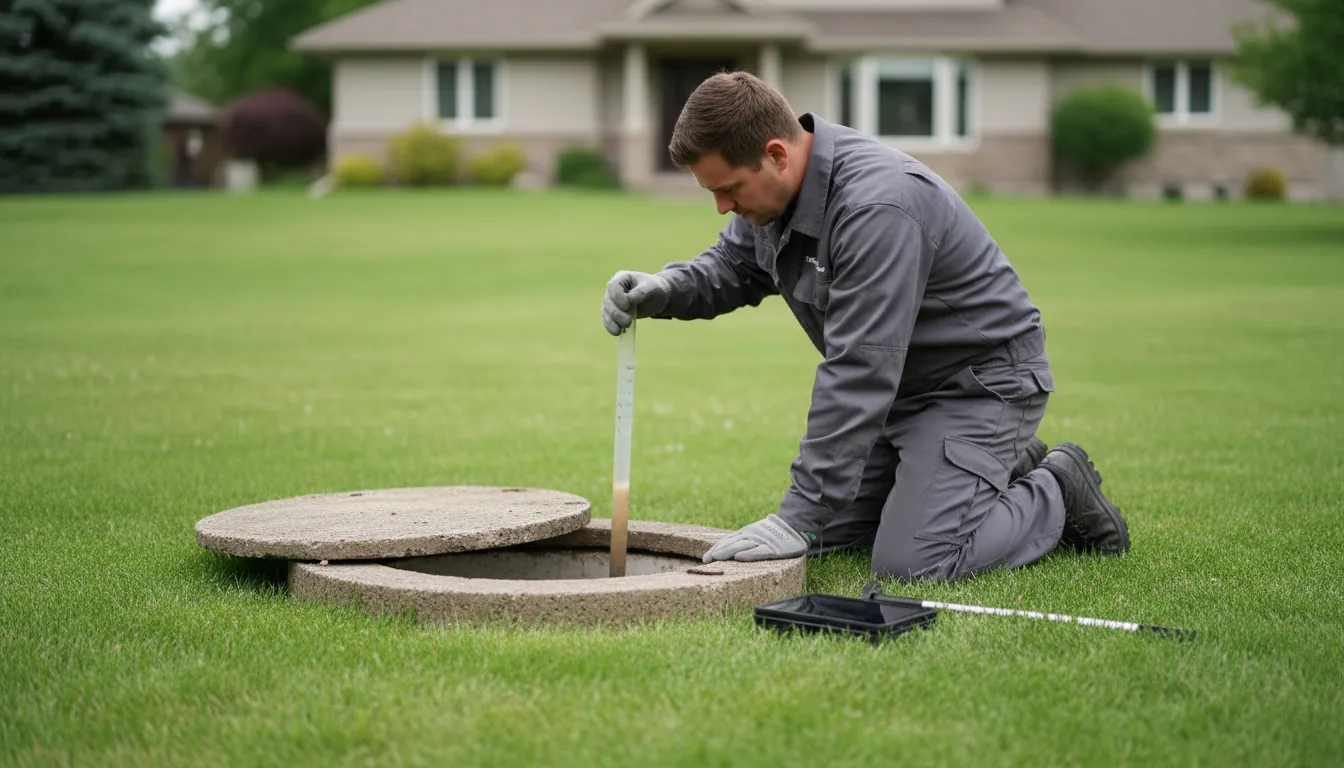

Our compliance reports meet or exceed the documentation standards required by Tennessee health departments and environmental agencies. When a system fails inspection, we provide specific, actionable repair or retrofit recommendations based on clear cost estimates. If you’re looking to understand what it will take to fix your system, we make that information easy to understand.
We also guarantee reinspection turnaround within five business days after repairs are done. That means your real estate closing, permit renewal, or code enforcement response stays on schedule. Contact Rural Septic TN today. We offer free consultations and are the trusted, top-rated choice for professional septic inspections across the region. Call us to request a service date.
Licensed & Certified
Tennessee State Licensed
Fully Insured
Comprehensive Coverage
Eco-Compliant
Permitted Disposal Sites
On-Time Service
We Keep Our Appointments
Signs You Need Septic Inspections & Compliance Services
Septic inspections aren’t only for property sales. Several warning signs indicate your system needs a professional compliance evaluation right now. If you have any of these issues, you should know it’s time to call a licensed inspector.
Sewage odor near the drain field or tank area:
An odorous yard around your leach field or septic tank access lids often signals a failing soil absorption system. Biomat buildup on the gravel bed can block percolation, forcing effluent to the surface. If you’re dealing with a smelly mess near your house, a qualified inspector will probe the lateral lines, test soil saturation levels, and determine whether the drain field is functional or condemned.
Slow drains and recurring backups inside the home:
Clogged or blocked outlet pipes, a deteriorated effluent filter, or an overloaded tank can cause wastewater to back up through cleanouts and floor drains. Slow-running toilets, gurgling plumbing, and sewer line backups are common symptoms. These issues point to a system that may already be non-compliant. An inspection will diagnose whether the problem sits in the tank, the conveyance pipe, or the field itself, and determine if cleaning or repairs are needed.
Standing water or waterlogged soil over the absorption field:
Saturated ground above your lateral lines means effluent isn’t infiltrating properly. This condition often violates county sanitary codes and can contaminate nearby drinking water wells. An inspector will assess hydraulic load, check the distribution box for uneven flow, and evaluate whether the reserve area can support an expansion or upgrade. Understanding how your system works is essential when planning repairs.
Upcoming property sale or title transfer:
Tennessee counties frequently require a real estate transfer inspection before closing. A non-compliant system can delay or kill a deal. Scheduling a septic inspection early gives you time to repair, replace, or remediate any deficiencies before the buyer’s deadline. It’s better to prevent surprises than deal with last-minute problems.
System age exceeding 20 years without documented inspection:
Older conventional systems with concrete tanks often develop corroded baffles, cracked walls, and leaking seams. These leaks can go unnoticed for years without proper maintenance. If your system has no recent inspection report on file with the health department, you’re operating without a compliance baseline. That’s a risk to your property and your groundwater. Regular inspections help extend the life of your system and ensure lasting performance. Many problems are found early when you stay on a consistent inspection schedule.
Our Septic Inspections & Compliance Process
Septic inspection work at Rural Septic TN follows a six-step process designed to be thorough, repeatable, and fully documented. Whether your project involves a routine check or a complex evaluation, our working methods remain consistent.
Records review
We pull your septic permit, as-built drawing, and any previous inspection reports from the county health department. This form of records review tells us the system type, tank size, drain field layout, and setback distances before we arrive on site. We also check what materials were used during original construction.
Tank access and evaluation
We locate the septic tank, uncover risers and access lids, and visually inspect the interior. Using specialized tools, we measure the scum layer and sludge layer, check the inlet baffle and outlet baffle for damage, and assess the effluent filter for clogging or bypass. We also check whether the tank interior is clean enough for proper evaluation.
Component testing
We test the pump and float switch in pump chamber systems, verify alarm function on aerobic treatment units, and inspect the distribution box for level flow to all lateral lines. If the system includes a dosing siphon, chlorinator, or UV disinfection unit, we evaluate each one. Our testing is never limited to surface-level checks. If something is not working properly, we stop and document it.
Drain field assessment
We probe the soil absorption system, check observation ports for effluent levels, and look for signs of surfacing wastewater, saturated soil, or biomat failure. We run a septic dye test when conditions warrant it. This step may involve clearing vegetation or debris from access points.
Water quality sampling
When required by the county or upon request by the property owner, we sample effluent for biological oxygen demand, total suspended solids, coliform bacteria, and nitrate concentration. We use the appropriate testing protocols for each situation.
Report and certification
We compile all findings into a formal inspection report. Compliant systems receive a certificate of compliance. Non-compliant systems receive a detailed remediation plan with recommended repairs, estimated costs, and a reinspection timeline. We finish this last step by explaining what needs to be fixed and answering any questions you have.
How Often Should You Pump? Quick Reference Guide
For smaller households (1-2 people), the recommended pumping frequency is:
Every 2-3 Years
Smaller tanks fill up faster, so staying on a tighter schedule is important. Garbage disposal use and water habits can shorten this window further.
For most households (2-4 people), the recommended pumping frequency is:
Every 3-5 Years
Factors like garbage disposal use, household size, and water usage can affect this schedule. Call us for a personalized recommendation.
For larger households (4-6 people), the recommended pumping frequency is:
Every 4-6 Years
Even with greater capacity, heavy water usage or a garbage disposal can accelerate sludge buildup. Regular inspections help you stay ahead of any issues.
For commercial and high-use properties, the recommended pumping frequency is:
Every 1-3 Years
Commercial tanks handle significantly higher daily loads, so frequency varies based on business type, occupancy, and usage patterns. We recommend a site assessment to build the right maintenance schedule.
Brands We Use
Septic inspections and compliance evaluations demand reliable diagnostic tools and replacement parts from manufacturers we trust. Rural Septic TN uses equipment and components from these top-rated brands:





Your safety and your groundwater quality depend on accurate readings and compliant parts — we don’t cut corners on either.
Other Services
septic inspections
septic system inspection
onsite wastewater evaluation
septic compliance
septic code compliance
health department certification
real estate septic inspection
pre-sale septic evaluation
title transfer septic assessment
septic inspection report
certificate of compliance
septic system documentation
septic inspection near me
local septic inspector Tennessee
licensed septic inspection service
FAQs About Septic Inspections & Compliance
What does a septic inspection include?
A septic inspection covers the full system, including the tank interior, baffles, effluent filter, pump chamber, distribution box, and drain field. We measure sludge and scum layers, test mechanical components like pumps and float switches, probe the soil absorption system for saturation, and check for setback violations. We also evaluate how the septic system connects to your home’s plumbing system. The result is a written inspection report with pass or fail status.
When should I schedule a septic inspection?
Schedule an inspection every three to five years for routine compliance monitoring. You’ll also need one before any real estate transfer, when applying for a septic permit renewal, or when you notice warning signs like sewage odor, slow drains, or standing water over the leach field. Please call us immediately if you have an emergency situation.
Why do Tennessee counties require septic compliance inspections?
Counties enforce septic compliance to protect public health and groundwater quality. A failing or non-compliant system can discharge untreated wastewater containing pathogens, nitrate, and phosphorus into the soil and nearby drinking water wells. Compliance inspections verify that your system treats and absorbs effluent within safe, permitted limits. These requirements also apply during new construction projects.
How long does a professional septic inspection take?
Most residential inspections take two to four hours depending on system complexity, accessibility of risers and lids, and whether water quality sampling is required. Aerobic treatment units and engineered mound systems typically require more time than conventional gravity-fed tanks. We handle each inspection with the same level of care regardless of how long it takes.
Can a failed septic inspection be corrected?
Yes. A failed inspection identifies specific deficiencies, including cracked baffles, clogged effluent filters, overloaded drain fields, and unpermitted modifications. We provide a remediation plan with repair or retrofit recommendations. Once repairs are completed, we reinspect and recertify the system so you can obtain your certificate of compliance. If you have questions about specific deficiencies, we explain them clearly.
Does a septic inspection require pumping the tank?
We recommend pumping before or during the inspection so we can fully evaluate the tank walls, baffles, inlet pipe, and outlet pipe. A full tank obscures cracks, corrosion, grease buildup, and structural damage that affect compliance status. Nothing is left unchecked. We coordinate pumping with our septic hauler to keep the process efficient.
Ready to Schedule Your Service?
Professional septic inspections & compliance done right, every time. Trust Rural Septic TN to get the job done.