

Soil & Perc Testing
Professional soil and percolation testing for septic system design across rural Tennessee communities.
Same-Day Emergency Service
Licensed & Certified Technicians
Serving All of Tennessee
Upfront Pricing, No Hidden Fees
Fully Insured
State Licensed
Eco-Compliant Disposal
Written Service Reports
Available 24/7 (00:00 – 23:59)
🎁 FREE Inspection with Every Pump-Out
Mention this offer when you call!
5 Highlights on Soil & Perc Testing
Certified soil evaluation
Our qualified soil scientists probe and sample each soil profile to determine permeability rate, hydraulic conductivity, and infiltration rate before designing any septic system. We perform thorough assessments of every soil horizon from topsoil through clay layers and bedrock.
Accurate perc rate measurement
We conduct percolation tests that measure how quickly water drains through sandy, loamy, silty, or clayey soils. Each perc rate reading directly determines what type of soil absorption system your property can support.
Test pit and boring log documentation
Our team excavates test pits and records detailed boring logs that map the water table depth, soil texture, and subsurface conditions. These records satisfy Tennessee health department requirements for septic permit approval.
Compliant reporting for permits
Every soil and perc test report we produce meets state and county standards. We prepare permit ready documentation that includes setback distances, reserved areas, and replacement area designations.
Fast turnaround across rural Tennessee
We schedule soil testing and percolation testing within days, not weeks. Property owners, builders, and real estate professionals count on our team to deliver results that keep projects moving forward.
Need Septic Service Today?
Our team is standing by to help. Fast response times and upfront pricing guaranteed.
Why Choose Our Soil & Perc Testing
Soil and percolation testing is the foundation of every septic system installation in Tennessee. Rural Septic TN brings expert field knowledge and certified soil science credentials to every property we evaluate. We don’t guess. We test, measure, and document.
Our soil scientists carry years of field experience reading soil profiles across Tennessee’s diverse terrain. From the gravelly ridges of the Cumberland Plateau to the silty bottomlands of West Tennessee, we’ve assessed thousands of sites. We know how to identify permeable sand layers, impermeable clay barriers, and saturated zones that affect drain field placement.
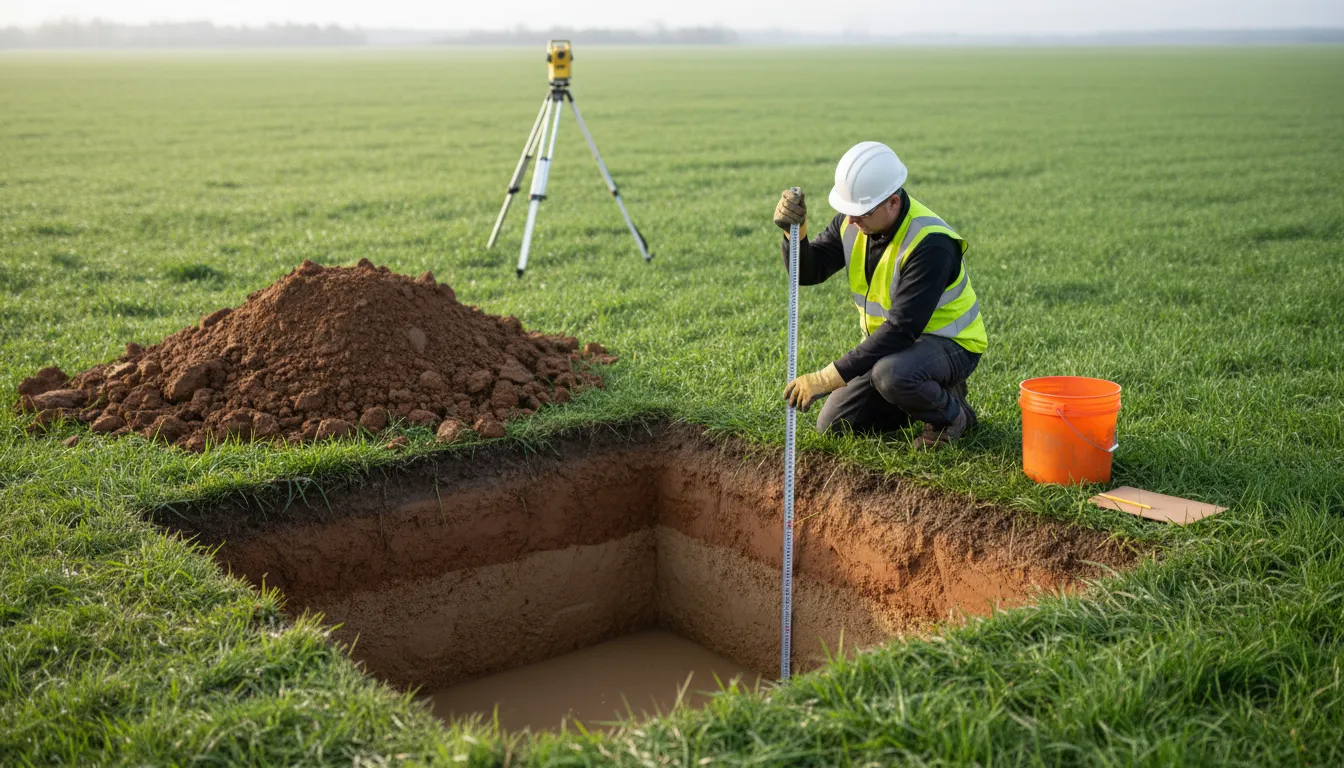
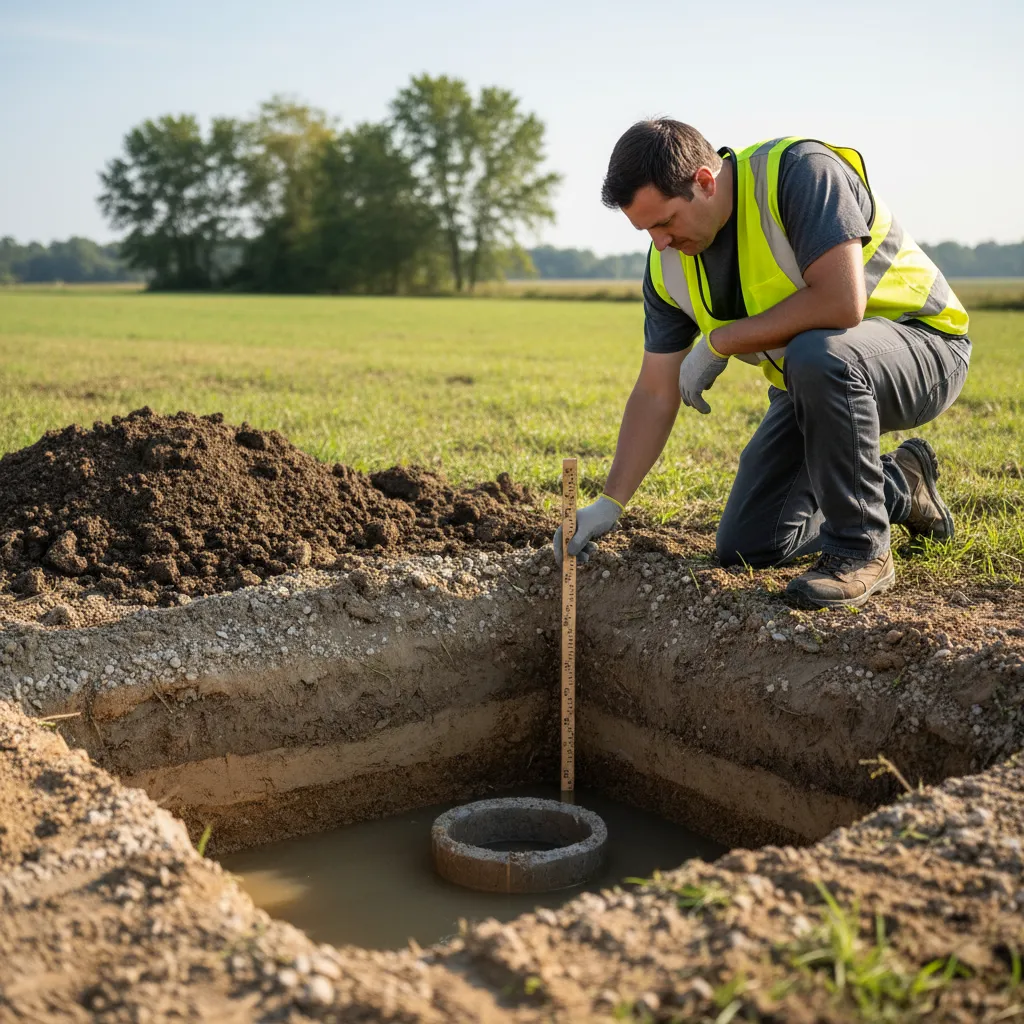
We use professional grade soil augers, piezometers, and monitoring wells to gather precise subsurface data. Every test pit gets a thorough evaluation. Every boring log captures the full picture. Our percolation test procedures follow Tennessee Department of Environment and Conservation protocols to the letter.
Rural Septic TN stands behind every report. If a health department reviewer has questions about our soil test findings, we respond directly and resolve issues fast. We also provide consultation on alternative septic solutions when conventional drain field designs won’t work for your soil conditions.
Our pricing is straightforward. No hidden fees. No surprise charges. You’ll know the cost of your soil and perc testing before we arrive on site. That’s how a trusted, top rated septic testing service operates.
Licensed & Certified
Tennessee State Licensed
Fully Insured
Comprehensive Coverage
Eco-Compliant
Permitted Disposal Sites
On-Time Service
We Keep Our Appointments
Signs You Need Soil & Perc Testing
Soil and perc testing is required or strongly recommended in several common situations. Here are five scenarios where you should schedule professional testing right away.
You're building a new home on undeveloped land:
Tennessee requires a septic permit before construction begins on any property without municipal sewer access. That permit demands a soil test and percolation test to prove the site can support an on site wastewater treatment system. Without a passing perc rate and favorable soil profile, the health department won’t approve septic systems for developing properties.
You're buying rural property and need to confirm it's buildable:
Smart buyers never close on acreage without knowing the soil conditions. A professional soil evaluation reveals whether the water table sits too high, whether bedrock is too shallow, or whether the ground is too clayey to absorb effluent. This single test can save you from purchasing an unbuildable lot.
Your existing septic system is failing:
Saturated ground, stagnant water pooling over the drain field, and sewage odors all point to a failing absorption field. A new soil and perc test helps determine whether the original system was installed in unsuitable soil or whether conditions have changed. The results guide your septic installer toward the right replacement area and system type.
You're subdividing property for multiple lots:
Each lot that will rely on a septic system needs its own soil test and perc test. County regulations require individual evaluations to confirm that every parcel has adequate permeable soil and sufficient setback distances from wells, property lines, and waterways.
Your county or lender requires updated testing:
Some Tennessee counties require new percolation test results if previous tests are older than a set number of years. Lenders financing rural construction often demand current soil and perc test documentation before approving loans. Outdated reports won’t satisfy these requirements.
Our Soil & Perc Testing Process
Soil and perc testing follows a structured, step by step process that produces reliable, permit ready results.
Site visit and consultation
We walk your property, identify potential drain field locations, and note topography, drainage patterns, and visible soil characteristics. We discuss your building plans and review setback distance requirements.
Test pit excavation
Our crew excavates test pits to expose the soil profile. We dig deep enough to evaluate multiple soil horizons, identify the water table, and locate any restrictive layers like compacted clay or bedrock.
Soil sampling and classification
We sample soil from each horizon and classify it by texture. Sandy, loamy, silty, and clayey soils each behave differently. We record color, structure, mottling, and moisture content in a detailed boring log.
Percolation test
We bore test holes at the proposed absorption field depth, pre soak them according to protocol, and measure the perc rate over a timed interval. This rate tells us how many minutes per inch water infiltrates the soil.
Report preparation and permit submission
We compile all field data into a comprehensive soil and perc test report. This document includes boring logs, perc rate calculations, site sketches with setback distances, and our system recommendations. You can view the completed report before we submit it to your local health department for septic permit review.
How Often Should You Pump? Quick Reference Guide
For smaller households (1-2 people), the recommended pumping frequency is:
Every 2-3 Years
Smaller tanks fill up faster, so staying on a tighter schedule is important. Garbage disposal use and water habits can shorten this window further.
For most households (2-4 people), the recommended pumping frequency is:
Every 3-5 Years
Factors like garbage disposal use, household size, and water usage can affect this schedule. Call us for a personalized recommendation.
For larger households (4-6 people), the recommended pumping frequency is:
Every 4-6 Years
Even with greater capacity, heavy water usage or a garbage disposal can accelerate sludge buildup. Regular inspections help you stay ahead of any issues.
For commercial and high-use properties, the recommended pumping frequency is:
Every 1-3 Years
Commercial tanks handle significantly higher daily loads, so frequency varies based on business type, occupancy, and usage patterns. We recommend a site assessment to build the right maintenance schedule.
Brands We Use
Soil and perc testing demands reliable, professional grade equipment. Rural Septic TN uses trusted brands that deliver accurate field results every time.







Every instrument we bring to your property is calibrated and maintained.
Other Services
Soil and perc testing
Soil percolation test
Perc rate measurement Tennessee
Percolation test for septic
Perc test for septic system
Septic permit soil evaluation
Soil testing for septic
Septic soil analysis
Soil absorption rate testing
Perc test near me
Percolation testing service
Hydraulic conductivity soil test
Soil evaluation for drain field
Septic site assessment
Water table depth testing rural TN
FAQs About Soil & Perc Testing
What is a soil and perc test?
A soil and perc test is a two part field evaluation. The soil test classifies subsurface soil types, identifies the water table, and maps restrictive layers like clay or bedrock. The percolation test measures how fast water drains through the soil at the proposed drain field depth. Together, these tests determine whether your property can support a septic system and what type of system fits the site.
When should I schedule soil and perc testing?
Schedule testing before you buy undeveloped rural property, before you apply for a building permit, or before you replace a failing septic system. Tennessee counties require current test results for septic permit applications. Don’t wait until construction is underway.
How long does a percolation test take?
A standard perc test takes one full day on site. The test holes require pre soaking, often overnight, followed by timed water level measurements the next morning. We typically deliver the completed report within five to seven business days.
Can soil fail a perc test?
Yes. Heavily clayey, compacted, or saturated soils can produce perc rates too slow for a conventional drain field. Shallow bedrock or a high water table can also cause a site to fail. When this happens, we evaluate alternative system options like mound systems or aerobic treatment units that may still work on your property.
Does every lot need its own perc test?
Yes. Each lot requiring a septic system must have an individual soil and percolation test on file with the local health department. Results from an adjacent parcel don’t transfer. Soil conditions can change dramatically over short distances, especially in rural Tennessee terrain.
How much does professional soil and perc testing cost?
Costs depend on the number of test pits, site accessibility, and county requirements. Rural Septic TN provides a clear quote before any fieldwork begins. Call us or send an email to request a detailed estimate. You’ll know exactly what your soil and perc testing will cost with no surprises.
Ready to Schedule Your Service?
Professional soil & perc testing done right, every time. Trust Rural Septic TN to get the job done.