

Drain Field (Leach Field) Repair
Professional drain field repair services and leach field restoration solutions for residential homes and commercial businesses across rural Tennessee
Same-Day Emergency Service
Licensed & Certified Technicians
Serving All of Tennessee
Upfront Pricing, No Hidden Fees
Fully Insured
State Licensed
Eco-Compliant Disposal
Written Service Reports
Available 24/7 (00:00 – 23:59)
🎁 FREE Inspection with Every Pump-Out
Mention this offer when you call!
5 Highlights on Drain Field Repair
Expert Diagnosis of Failing Drain Fields
Our certified and licensed septic professionals use camera scopes, dye tests, and soil probes to diagnose exactly where your leach field has failed. We use advanced diagnostic tools to assess biomat buildup, root intrusion, and saturated gravel trenches before recommending any appropriate corrective action.
Full Excavation and Lateral Line Replacement
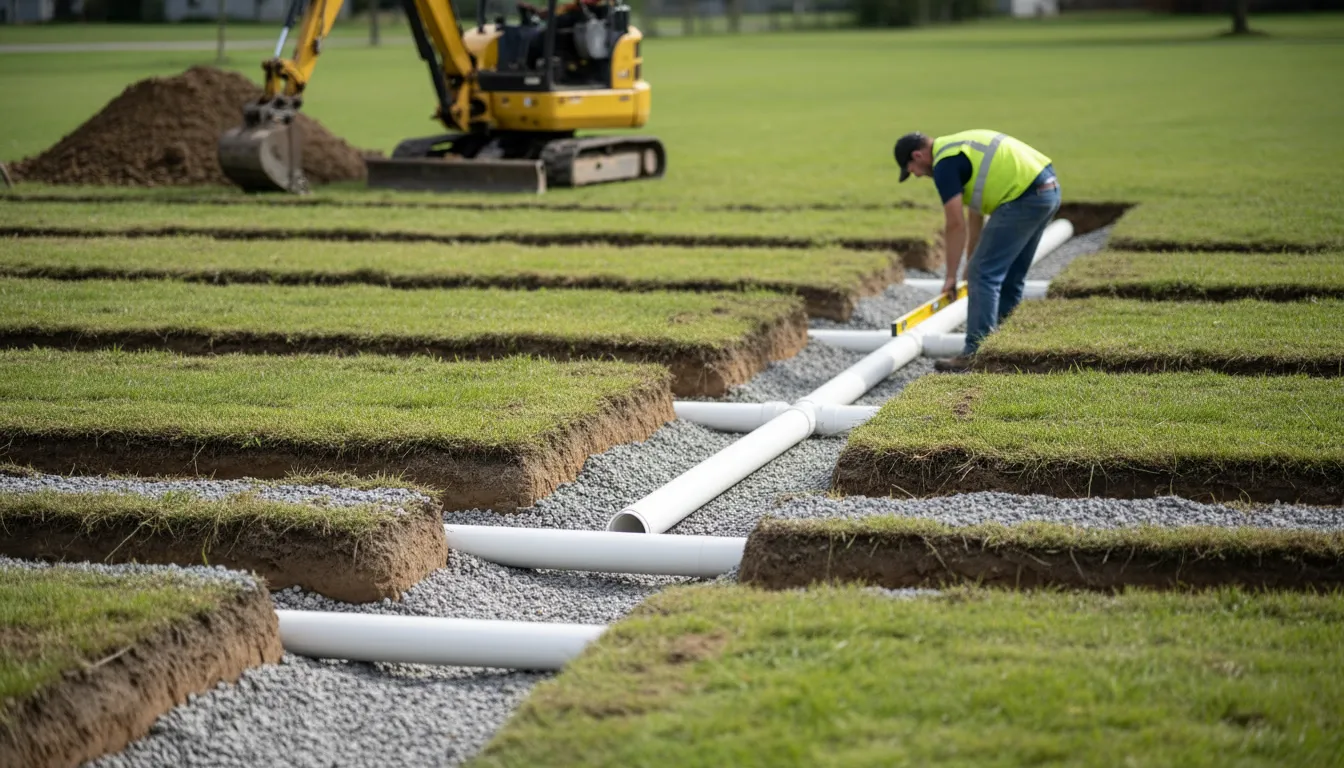
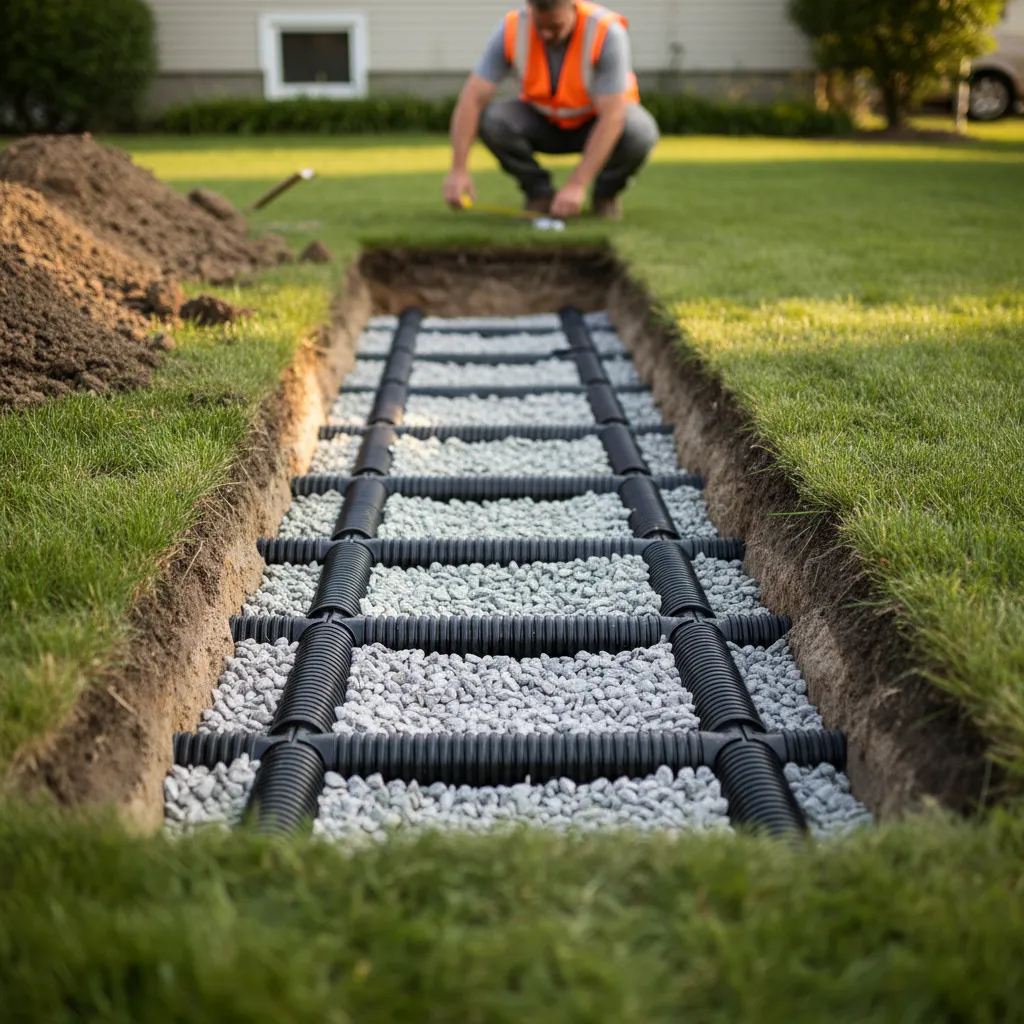
When perforated piping collapses or clogs beyond repair, we bring in backhoes and trenchers for digging and excavation of the failed absorption trenches. We handle pipe replacement of crushed drain lines, install fresh washed stone, and backfill with graded material to restore proper effluent dispersal with lasting results.
Distribution Box Repair and Rerouting
A cracked or tilted D-box sends uneven hydraulic loads to your leach lines. Our experienced technicians level, replace, or reroute distribution boxes so effluent flows evenly across every lateral line in your plumbing system, improving efficiency throughout your septic system.
Biomat Remediation and Field Rejuvenation
Thick biofilm coatings choke soil absorption rates over time, leading to recurring drainage issues. We treat clogged seepage beds with aeration, jetting, and targeted bacterial inoculation using trenchless techniques to rejuvenate drain field percolation without full replacement, helping prevent future failures.
Reserve Area Planning and Permit Coordination
Tennessee health departments require a designated replacement area for every septic system. We survey your property, coordinate permits, handle inspections, and confirm setback distances from wells, property lines, and surface water before breaking ground to ensure safety and compliance.
Need Septic Service Today?
Our team is standing by to help. Fast response times and upfront pricing guaranteed.
Why Choose Our Drain Field Repair Service
Drain field repair is the most complex job in the septic and sewer industry. It demands soil science knowledge, excavation skill, and code compliance at every step. Rural Septic TN brings all three to your property as your trusted service provider.
We are a licensed and insured company holding current certifications required by Tennessee’s health department for onsite wastewater system work. Every technician on our crew has hands-on expertise diagnosing failed leach fields, handling replacements of lateral lines, and rehabilitating saturated absorption trenches in the clay-heavy, rocky, and loamy soils found across rural Tennessee counties.
Our diagnostic process sets us apart. We do not guess. We scope drain lines with cameras, run dye tracer tests, and pull soil samples to measure percolation rates before we write a single recommendation. That means you get an accurate repair plan tailored to your specific needs, not an oversized project that wastes your money.
We guarantee our leach field repair services with a written warranty covering materials and workmanship for lasting quality. If a replaced drain line settles, a new gravel bed compacts, or a distribution box shifts within our warranty period, we respond and come back to fix it at no charge.
Pricing stays transparent starting from the first inspection. We provide detailed estimates that break down excavation, pipe, aggregate, filter fabric, backfill, and permit fees. No surprises on your invoice. Contact us today for more details. Rural Septic TN has built its reputation on honest, qualified drain field repair work and high-quality service, and we plan to keep it that way.
Licensed & Certified
Tennessee State Licensed
Fully Insured
Comprehensive Coverage
Eco-Compliant
Permitted Disposal Sites
On-Time Service
We Keep Our Appointments
Signs You Need Drain Field Repair
Drain field failure rarely happens overnight. It builds over months or years, and the warning signs show up in predictable ways. Understanding these indicators helps you identify when to contact a professional. Here are five detailed indicators that your leach field needs professional repair.
Soggy or Waterlogged Yard Over the Leach Lines:
Standing water or persistently marshy ground directly above your absorption trenches means effluent is not percolating into the soil. Saturated conditions develop when biomat layers coat the gravel bed, when clay soils compact around perforated pipes, or when the water line rises above the trench bottom. Grass that stays greener and taller over the drain field compared to the rest of your yard confirms this pattern and may indicate property damage if left unaddressed.
Foul Smelling Odors Near the Septic System:
Odorous gases escaping from the soil surface signal that anaerobic decomposition is happening too close to ground level. A properly functioning leach field disperses effluent deep enough that bacterial digestion occurs underground without producing noticeable smells. When you catch a sewage or sewer odor near the D-box, along lateral lines, or around the seepage bed, the field has lost its subsurface treatment capacity. Our professionals can assist you in identifying the source.
Slow Drains and Toilet Backups Inside the House:
Plumbing fixtures that drain sluggishly throughout the home, including your bathroom sink, kitchen sink, and other drains, point to a hydraulic overload downstream. Unlike simple clogs that affect one fixture, this issue impacts your entire plumbing system. When the drain field cannot absorb the daily gallons per day your household produces, effluent backs up through the septic tank and into your plumbing. This differs from a simple clog handled by plumbers because every fixture in the house slows down simultaneously.
Effluent Surfacing or Pooling Near the Distribution Box:
Visible wastewater ponding around the D-box or at the head of your leach lines means the distribution system has failed. A broken distribution box, a blocked header pipe, or collapsed lateral lines force effluent to the surface instead of dispersing it underground. This creates a contaminated, hazardous condition posing safety risks that demands emergency on-site remedial action.
Septic Alarm Activating Frequently:
If your dosing chamber or pump chamber alarm triggers repeatedly, the effluent pump cannot move wastewater out to the drain field fast enough. A failing absorption field creates back pressure that keeps the pump chamber full. The float switch trips the alarm because the system has nowhere to send the effluent. Frequent alarms paired with any of the signs above confirm your leach field needs repair or replacement. Do not wait for recurring alarms before you contact us.
Our Drain Field Repair Process
Drain field repair at Rural Septic TN follows a structured, step-by-step approach that protects your property from damage and meets Tennessee code requirements. We recommend this thorough process for every job.
Site Inspection and Diagnosis
We arrive with camera scopes, soil probes, and dye tablets along with other diagnostic tools. Our inspector locates the septic tank, distribution box, and all lateral lines. We check the scum layer and sludge layer in the tank, scope the drain lines for root intrusion or collapse, and run a dye test to trace effluent flow through the absorption field. Our experienced professionals diagnose issues accurately even in areas with limited access.
Soil Testing and Percolation Assessment
We pull soil samples and perform perc tests in the repair area and the designated reserve area. Sandy, loamy, silty, and clayey soils each absorb at different rates. Understanding these options helps us determine the best fit for your property. These results determine trench depth, spacing, and aggregate specifications for the repaired leach field.
Permit Acquisition
We submit repair plans to the local health department, confirm setback distances from your well, sewer line connections, water line locations, property lines, and any surface water, and secure the required permit before any excavation begins. All inspections are handled by our team.
Excavation and Repair
Our crew uses excavators and trenchers for digging to remove failed gravel trenches, collapsed perforated pipes, and degraded filter fabric. We install new drain lines using high-quality materials, fresh washed stone or chamber systems, geotextile fabric, and a properly graded distribution network. We handle all repair and replacements of the D-box as needed. Our techniques improve system efficiency and help prevent future issues.
Backfill, Grading, and Final Inspection
We backfill trenches with approved fill and clean topsoil, grade the surface for proper stormwater runoff, and establish grass cover. A final inspection confirms the repaired drain field meets all code-compliant standards. We walk you through the completed work and provide maintenance recommendations to extend the life of your restored leach field. Our quality service ensures lasting results.
How Often Should You Pump? Quick Reference Guide
For smaller households (1-2 people), the recommended pumping frequency is:
Every 2-3 Years
Smaller tanks fill up faster, so staying on a tighter schedule is important. Garbage disposal use and water habits can shorten this window further.
For most households (2-4 people), the recommended pumping frequency is:
Every 3-5 Years
Factors like garbage disposal use, household size, and water usage can affect this schedule. Call us for a personalized recommendation.
For larger households (4-6 people), the recommended pumping frequency is:
Every 4-6 Years
Even with greater capacity, heavy water usage or a garbage disposal can accelerate sludge buildup. Regular inspections help you stay ahead of any issues.
For commercial and high-use properties, the recommended pumping frequency is:
Every 1-3 Years
Commercial tanks handle significantly higher daily loads, so frequency varies based on business type, occupancy, and usage patterns. We recommend a site assessment to build the right maintenance schedule.
Brands We Use
Drain field repair demands reliable materials that hold up in Tennessee’s variable soil conditions. Rural Septic TN installs products from these trusted manufacturers:








Every product we install meets or exceeds Tennessee health department specifications for onsite wastewater systems.
Other Services
drain field repair
leach field repair
septic absorption field restoration
drain field replacement
leach line replacement
lateral line installation septic
failing drain field
failed leach field
saturated septic drain field signs
drain field inspection
leach field diagnosis
septic dye test percolation assessment
drain field cost Tennessee
leach field repair near me
septic drain field contractor rural TN
FAQs About Drain Field Repair
What is drain field repair?
Drain field repair is the process of diagnosing and fixing a failing or failed leach field, which is the subsurface network of perforated pipes, gravel trenches, and soil that filters and disperses septic tank effluent. Repair services range from clearing clogged lateral lines and handling replacements of a cracked distribution box to full excavation and replacement of the entire absorption field. Our licensed professionals can assist you in understanding the appropriate solutions for your specific needs.
When should I schedule a drain field inspection?
Schedule an inspection when you notice soggy ground over the leach lines, foul smelling odors near the septic system, slow drains throughout the house including bathroom and kitchen fixtures, or effluent pooling on the surface. Annual septic tank pumping appointments are a good time to ask your pumper about drain field condition too. Regular inspections help prevent major issues and improve system longevity.
Why do drain fields fail?
Drain fields fail for several reasons. Biomat buildup coats gravel beds and chokes soil permeability, causing recurring drainage problems. Tree roots breach and collapse perforated piping. Hydraulic overloading from excess water usage, including from water heater leaks or running fixtures, saturates the absorption trenches. Compacted soil from vehicles or structures parked over the field reduces percolation. Undersized systems installed for fewer occupants than currently live in the home also lead to premature failure. Understanding these causes helps you take appropriate steps to prevent future problems.
How long does a drain field repair take?
Simple repairs like D-box replacement or single lateral line clearing take one day. Full drain field replacement, including digging and excavation, new pipe replacement and aggregate installation, backfill, and grading, typically takes two to five days depending on soil conditions, field size, limited access areas, and permit turnaround. We respond promptly to all service requests and provide detailed estimates before starting any work.
Can a failed drain field be repaired, or does it always need replacement?
Not every failed leach field requires full replacement. Biomat remediation through aeration and bacterial inoculation can rejuvenate some clogged fields. Hydro-jetting clears clogs and root intrusion from otherwise intact drain lines using trenchless techniques. Our experienced professionals use diagnostic tools to diagnose the issue and determine whether targeted repair or complete replacement gives you the best long-term, lasting result that will fit your budget and improve your system’s efficiency.
Does homeowner's insurance cover drain field repair?
Most standard homeowner’s policies do not cover septic system repairs because they classify drain field failure as a maintenance issue. Some policies may have property damage covered when caused by sudden damage from events like tree root collapse or broken piping. Check with your insurance provider for details on what options may be covered, and we will supply any documentation they request from our inspection and on-site repair work. Contact our company for quality service estimates.
Ready to Schedule Your Service?
Professional drain field (leach field) repair
done right, every time. Trust Rural Septic TN to get the job done.